
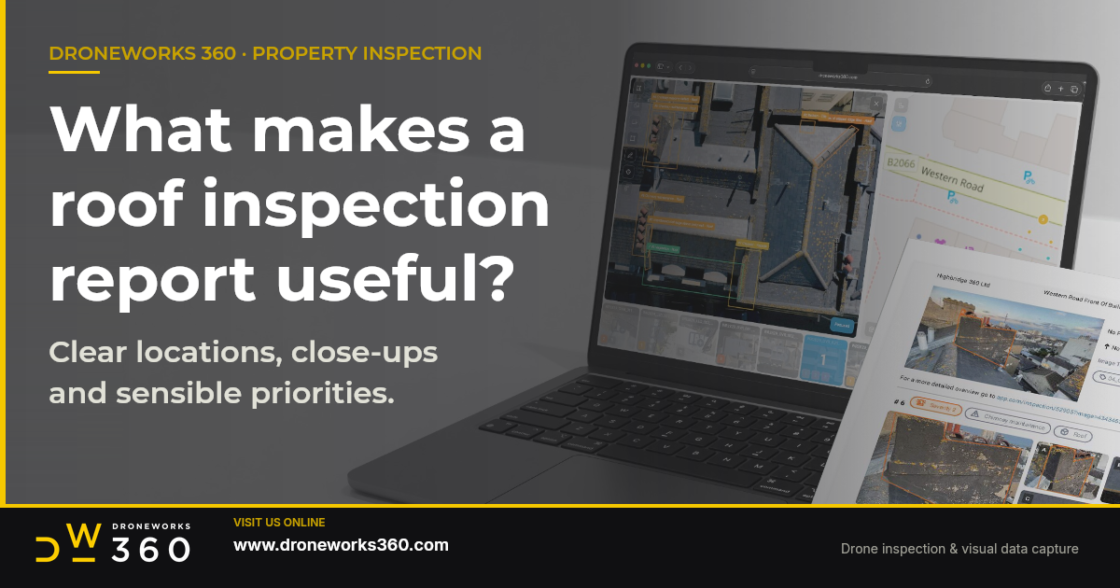
What to ask for in a drone roof inspection report
A detailed roof photograph can draw attention to a possible defect. To use it for a maintenance decision, someone also needs to understand where it was taken, what it shows and what should happen next.
That is why the report is an important part of a drone roof inspection. It brings the images together in a form that property managers, surveyors and contractors can return to and share.
An overview that explains the building
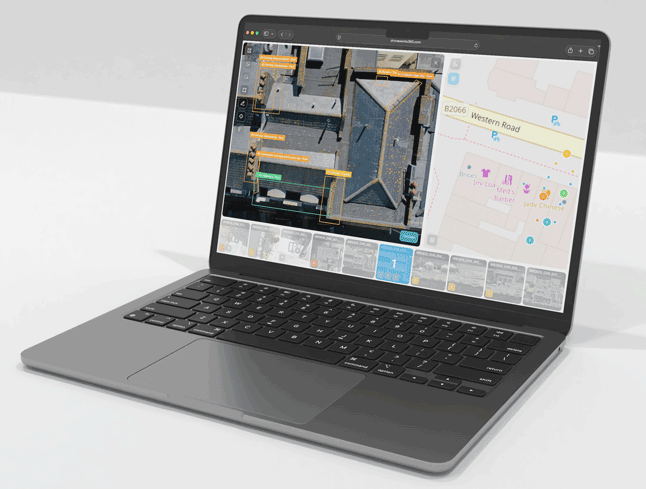
A useful starting point is an overview of the roof or the relevant part of the building. This gives the reader a way to recognise separate roof areas, changes in level and features such as chimneys, parapets and drainage outlets.
Where the building is complicated, one overview may not be enough. A second angle can help explain the arrangement without asking the reader to work it out from a collection of close-ups.
Close-ups connected to a clear location
A close-up is much more useful when the reader can place it on the building. A consistent reference or annotation can connect it to the overview and to the written observation.
The photograph should show enough detail to support the comment. If an area is partly hidden, that should be clear too. A description such as “rear roof, beside the courtyard outlet” gives the next person a better starting point than an unlabelled image.
Comments that separate observation from uncertainty
The wording should explain what is visible and how that relates to the suggested next step. It should also distinguish a visible condition from a cause that has yet to be confirmed.
For example, a photograph may show debris around an outlet or deterioration to a surface. It may not establish the condition inside a pipe, beneath a covering or behind a wall.
Clear wording helps avoid treating a possible explanation as a confirmed diagnosis. Further access or investigation can then be considered where needed.
Priorities that help someone decide what to do
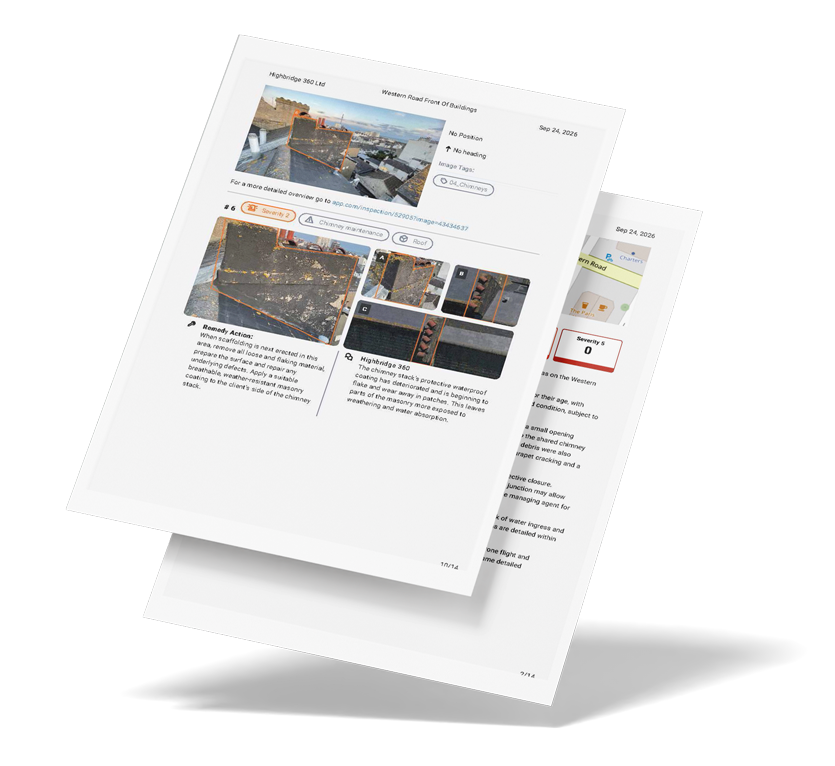
A report is easier to use when the reader can distinguish between an item needing prompt attention, work to plan and a condition to monitor.
Those priorities should relate to the observations and the agreed scope. Where there is not enough information to recommend a repair, the next step may be a closer inspection rather than immediate work.
Short, specific comments also make it easier to pass the report to a contractor for a quotation.
A record that remains useful after the visit
Ask how the photographs and report will be delivered, whether the images have clear references, and how long any online access will remain available. If the report is hosted online, confirm the access period rather than assuming it is permanent.
Keeping a dated copy of the report provides a reference for later maintenance or another inspection. A consistent naming system makes it easier to compare the same roof area over time.
Clear limits are part of a useful report
A visual drone inspection records what can be seen from the positions available. It does not reveal every concealed condition or replace a structural assessment.
A useful report identifies areas that were not visible and explains any further checks recommended. That gives the person managing the building a clearer basis for deciding what to do next.
Discuss the inspection and the outputs together
Droneworks 360 provides drone roof inspections, aerial imagery and visual reporting for property professionals. Contact us with the property address, the reason for the inspection and the information you need from the report.
